Normality?

Normality?There is something about being a normal person that’s comforting. I know that, because apart from living frugally in the Caribbean as a self-employed dilettante, I’m a quite normal person, enjoying quite normal things. Okay, I’m no television and football fan, like most males in my age, and I hate cars. But I enjoy Hollywood cinema and cold beer, so there you have it. We’re all normal (as we’re all weird), to a certain extent.

The comforting thing about normality is this: If you are normal and enjoy normal things, you don’t stand out. You don’t have to worry, you don’t have to care. You don’t have to demonstrate against the government, because you like the normal way things are going. You don’t have to eat healthier, because you’re okay with having a normal figure and a normal life expectancy. You don’t have to kill yourself at work, because you come along with a normal paycheck, and you’re happy with your children going to a normal school.

The problem is that normality can also be a comforting way of ignoring our problems and making them worse. It can become normal to see your uncle drink half a bottle of whisky each day, but in reality, he is becoming an alcoholic. It can become normal to read that each year there are less albacore tunas caught in the Mediterranean sea, but in reality, we are extinguishing them. It could even become normal to see BP destroy our oceans because of unbelievable greed, but in reality, it’s not. It’s doing the wrong thing – and it’s us who are doing it, it’s us who are responsible, because we are living a lifestyle of unsustainability that has become our current normality.

Alcoholics, extinction of species, and the pollution of our planet caused by our addiciton to oil may be as normal as underarm hair. But just because it’s “normal”, we don’t have to accept it. If things were different, why would we shave our armpits? Why would we invent pain killers, if pain is something completely normal? Why bother about using condoms, if AIDS is normal?

Normality doesn’t exist. It’s always a question of our point of view and our interpretation of reality. Whatever we are doing (or not doing) that feels wrong, we are free to change it at any moment of our lives – even if it appears to be normal. We may as well start here and now.


Related NSFW Rap Song: Average Normal Guy
Illustration based on a photo (cc) by kk+.

Time Independence

Time Independence: A Personal Decision

“…for the devil is come down unto you, having great wrath, because he knoweth that he hath but a short time.” (Revelation 12:12)

“But time is life itself, and life resides in the human heart. And the more people saved, the less they had.” (Michael Ende, Momo)

Despite our Time Anxiety: An Introduction

Much of the anxiety in our modern societies comes from the feeling that there is not enough time. We’ll schedule it, we’ll save it whenever we can, we’ll hurry – to no avail. Time still seems to be running out.

But what about the reality behind that perception? Truth is, hunter-gatherers were probably less busy than we are. But, as far as we can tell, their life expectancy was a lot lower than ours. Truth is also that we have more free time today than we had during the last two centuries, when industrial workers were relentlessly exploited. While our current 9-5 situation isn’t desirable for many reasons, it’s certainly better than working 70 hours a week in a textile factory.

Where does the feeling of time scarcity come from, then? My thesis is that it is nothing but a form of bad faith – and life would be a lot better if we just stopped living as we do, and simplified our relationship to time. In a context of applied escapology, let’s have a look at the roots of our understanding of time, and how to get rid of bad faith in order to become time independent.

There’s No Such Thing as Time

It seems to be a good writer’s tradition to begin essays on time quoting Saint Augustine describing the difficulties of defining what time really is. I’ll leave this to you and Google to find out, because from a bad faith perspective, it’s much more interesting to look at what time is not: A fixed and universal “thing”, for example, that governs our lives objectively. It’s more, after thousands of years of discussion, scientists slowly arrive at the conclusion that time might not exist at all.

In modern physics, time is generally understood as entangled with space. In Einstein’s theory of relativity, spacetime does not include the notion of a universal time component: The time component for events that are viewed by people in motion with respect to each other will be different, and as there’s no place in the universe that is completely stationary, measured time will differ a lot depending on where we are and how we are moving. While physicists are still searching for the perfect “world formula”, unifying the relativity theories with quantum physics, it’s pretty sure that time won’t be of fundamental importance for it.

Einstein brought the consequences of this to the point when he said, “People like us, who believe in physics, know that the distinction between past, present, and future is only a stubbornly persistent illusion.” Time could then be nothing but a tool for human beings, created by human beings. Similar ideas have been expressed for thousands of years, like in the 5th century BCE in Greece, when Antiphon the Sophist held that, “Time is not a reality, but a concept or a measure.”

Modern units of time measurement are more or less arbitrary. In our current standard, units of time are based on the second, defined as “the duration of 9,192,631,770 periods of the radiation corresponding to the transition between the two hyperfine levels of the ground state of the caesium 133 atom.” A day is divided into 24 hours, an hour into 60 minutes. A minute, you would expect, is made of 60 seconds, but that’s not always the case: As Mother Earth is slowing down, some minutes will have 61 seconds to make up for it. This happens currently approximately every 18 months, when so-called “leap seconds” are added to keep our Coordinated Universal Time close to mean solar time. One could say that Earth itself is not “precise enough” for our atomic clocks!

Biorhythm doesn’t help, either. Pulse or breathing will change many times a day, depending on our mood and activity levels. And then there’s the importance of what we’re doing at any given moment: Ten minutes drinking with friends generally will pass a lot faster than ten minutes waiting for a job interview.

There are also cultural differences. While Westerners are entangled in the perception of having to schedule events, running late and being stressed, traditional communities behave completely different. Austrian ethnologist Andreas Obrecht provides a typical example of the Mianmin in the highlands of Papua New Guinea. In this tribe, everybody works, sleeps, and relaxes just as they see fit – be it day or night. Both stress and boredom are unknown to them.

In contrast, in our own societies, even young children are already trained to worship the clock, be punctual, and have their agendas filled with school, sports, and entertainment program. Using the terms of Hans Blumenberg, they are taught to suppress their personal “life-time” in order to fit in with the imaginary flow of “world-time” measured by our watches. This results in a growing gap between how we experience time personally and how our environment forces us to perceive it.

Time as Control

As the gap between world-time and life-time widens, discontent rises. During the July Revolution of 1830, Parisians would smash the clocks in their city: They understood that time was used as a means of suppression and control. How much have times changed, if we compare their behavior to our own addiction to watches and electronic gadgets remembering us to “stay on time”.

Sure enough, humans have had a long tradition to get a grip on time, or what they perceived as it. In neolithic times, moon calendars would be used to prepare crop cultivation, and shadow clocks were built in Egypt as early as 3.500 BCE. The position of the sun was the main indicator of time for millenia to come, and only well into the Middle Ages, mechanical clocks were invented. Even then, there were no standard time zones, and every city would have its own local solar time.

But as complexity grew in the globalizing societies, leading to ever-increasing transport and communication among countries and continents, worldwide standardization of time became crucial to keep the system growing. It started when British train companies adopted Greenwich Mean Time as a standard for their timetables in the 19th century, in order to ease planning trips through the country. In 1884, Greenwich was adopted as the prime meridian, and global timezones could be established – a process that was only finished well into the 20th century.

As we see, local solar time and local calendars were abolished due to the necessities of economic development: Without linear standard time, no globalized growth economies. If you want to keep your machines running 24 hours a day, you need to make sure that all the workers know when to punch the clock. If you want to deliver goods and services “just in time”, you need to make sure you’re working time-coordinated.

But it’s more than that. In both nation state and growth economy, time becomes important to measure, compare and control human beings and their usability for the system: Which student learns faster? Which worker accomplishes more in a given span of time? The ultimate consequence of this is Franklin’s claim that “time is money”: If you manage to maintain growth at a certain rate, your money of today indeed will be worth more tomorrow, if you invest it right.

What we should remember, though, is that this notion of our economy is not natural. You cannot have permanent growth based on limited resources: At 5% growth, GNP would double every 14 years. How long can you continue like that, when all you’ve got is one tiny little planet?

As our clocks have changed from sundials to ticking mechanical devices to silent radio-controlled gadgets, the logic of “measuring time” became an apparently fixed and absolutely valid order for us – even though nothing of this really exists. In our perception, our social universe became one with the natural, as we created a kind of coordinate system of bad faith covering the whole planet, allowing its control and the organization of the world system.

The Art of Decision-Making

We were raised in time anxiety, and our resulting discomfort has led to several strategies to deal with it. The only way to escape the situation temporarily seems to be an ephemeral opt-out called vacations: Our fortnight of holidays are the only days in the year where it’s socially acceptable to let time pass in idleness. That said, consumerism should always continue, as it helps maintaining the system.

Outside of vacations, the annihilation of time has become the biggest thinkable crime. When the same concept of time we invented is worshipped as our Goddess, idleness and unproductivity become the only cardinal sins left on Earth. So much for talking about a God delusion: If you’re idle, you don’t honor the Goddess. If you don’t honor her, you’re not competetive. If you’re not competetive, you’ll get bad ratings. If you get bad ratings, you’ll lose your job, you’ll drop out of the system, and you’ll spend the rest of your life as a deadbeat in a run-down trailer park in Ohio.

This tragedy of having to make “good use” of time is not limited to work, of course: Apart from having a career, we should have a great family. Cook something healthy and work out every day. Keep up with politics and gossip and the latest movies, but also leave time to meditate and brush up our Mandarin.

The most popular solution for anxiety seems to be “time management”: Set a reminder for everything you’ve got to do, always carry a calendar and a watch, write down every thought and appointment. But all time management strategies are nothing but superficial treats of the symptoms, ignoring the underlying root of the problem: The true reason for maintaining bad faith is that we’re afraid of making the decision to do less.

We are living in a world with more options than ever before. Many of them are free, others are not, being offered to us by people who want our money. We’ll often opt for the latter ones, because they are marketed. They are advertised as an “easy way out”, like taking the blue pill in Matrix. But while retail therapy may calm our anxiety for a moment, its long-term consequences are devastating: The more we spend, the more we need to earn, the more time we have to use for paid work, the less control we have of our lives. Also, the more stuff we buy or plan to buy, the more mediocre options we add to our lives. What happens here could be described as a vicious circle of child-learned time dependence that leads to harmful spending habits, resulting in real financial trouble that reinforces bad faith concerning time dependence. Instead of making our own decisions, we’ll just accept what we are fed by the marketers.

The Remedy

Conscious personal decision-making and reducing options is crucial if we want to change things and become time independent. As German philosopher Odo Marquard writes, “Even if you want to change just a few things, you have to leave most things untouched, or even the few things will fail that are indeed changeable.” But instead of engaging in change, we are waiting for more information to make our decisions. We desire to be completely informed and we’re longing for perfect conditions. Consider this: Fidel Castro didn’t have perfect conditions when he went to Cuba to make his revolution. He didn’t have enough allies, he didn’t have enough money to get a good boat, he didn’t manage to arrive at the island without losing the majority of his men. Yet, two years after Fidel’s landing, Cuban dictator Fulgencio Batista had to abandon his New Year’s Day party and get on a plane to leave the country to the revolutionaries.

As Sartre noted, “man is free within a situation, not within a vacuum space”. We’ll never have full control about the externalities of life, and not even about our own mind and body, but we have to work with what we’ve got. We have to unlearn the desire to buy solutions, and learn that, more often than not, it’s up to ourselves to create them, starting with a decision on the direction to take. The good news is that our intuition helps us in decision-making. While this needs some training, over the years of surviving on this planet, we get pretty good at just doing the right thing, even though we might not have conclusive data to back up our decision.

Beware, though, that no choice is still a choice, and often not the best one. It can entangle us in living a life of boredom, overwhelmed by all the options we have. “There’s no reality except in action”, Sartre says. Instead of inspiring action, marketers want us to stay passive and indecisive, in order to make us buy into their claims of selling the cure to our ennui.

Once we decide against them, we are free to create a life for ourselves and become time independent. Our modern concept of time cannot be changed easily on a macro level. What can be changed is our personal relation to it. We consciously reduce our options. We just stop buying what the system wants to sell us, in both ideology and products. We live frugally, giving ourselves permission to work less. We’ll have more time than ever, and suddenly we are free to use it for productive endeavors that matter and for idle pleasures alike. This decision may not be an easy one, like the ones advertised by our teachers or the corporate marketers. But it will be the only one allowing us to make bad faith in time perception vanish, just like time itself might vanish during the next revolution in quantum physics research.


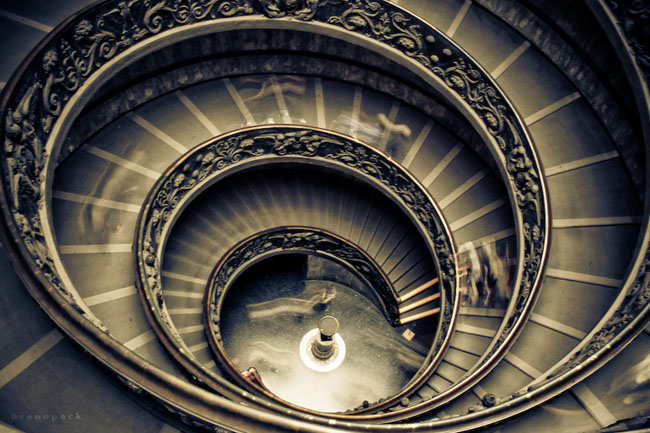
This article was first published in New Escapologist, “The Bad Faith Issue”. The issue features Tom Mellors on Anarchy and Escapology in the Great Depression; a guide to epic travel with kids; Reggie Chamberlain-King on Sartre and Flaubert; and much, much more. If you are interested, you should get your copy here. Photo CC-BY-NC-SA by Breno Peck.

“Get Disorganised” (An Interview with Robert Wringham)

Robert WringhamAfter many attempts, I finally managed to find a cellphone company that offers 3G access out here in the village, so I am happy to present you today this interview with writer, performer and escapologist extraordinnaire, Robert Wringham.

I found out about Robert’s endeavors online, and have since been in touch with him, contributing a couple of articles to the New Escapologist, “an irregularly published magazine that celebrates the “flight” bit of the “fight or flight” quandary”. New Escapologist promotes freedom, Anarchy and the Absurd, and thus is a perfect fit for TFA.

In this interview, Robert and I talk about ignoring the system, absurdity, the status quo of comedy, and how minimalism helped him to escape from his day job.

What is Escapology and why does it matter?

I’m starting to see Escapology as being a special strain of Anarchy. Where traditional Anarchists would want to smash the system in various ways, I advocate simply ignoring the system wherever possible. There’s a philosophy professor I like called Roderick Long: he said something about disregarding the demands of the government as if they were the demands of a delusional street person. I like that description: as a left-winger, I sympathise with the State but their demands on our time, money, liberty and obedience are often too great.
Whenever I see government documentation or an episode of Question Time, I think, “How dare they speak to us like that?” I won’t be hemmed in to a certain mode of behaviour just because they’ve deemed it the correct one and ensured its continuation through force.

To answer your question more directly though, Escapology is about engineering a situation in which you don’t have to deal with the rubbish we’re expected to deal with: a career, a mortgage, debt, too much tax, too much property, annoying things like cell phones, mind-rotting distractions like television. Instead, try and foster a more vital and frigal way of living – as the Bohemians did – so that you don’t have to work so hard, maybe even make a living through your art, and you can laugh all of these things off.

Have you ever attended an Anarchist meeting? They like ‘fairness’ and so they become obsessed with things like committees and agenda and provisions. They develop highly complicated little bureaucracies, which is one of the things they probably hate about the government but they end up doing it themselves. Better to get disorganised, I say, and just get on with living.

When it comes to Escapology, you seem to be very good at balancing theory and practice: Not only did you start a magazine on the topic, but you also created freedom for yourself, escaped from work and moved to another continent. What was the main lesson you learned?

On a personal note, I think I learned that my natural state is a kind of nervousness. When I was a worker I would worry constantly about not having enough time to do my own stuff, that I wouldn’t be able to meet a deadline or that I would sleep through my alarm again and not get to the office on time. Now that I’ve escaped, I worry about other things: that the money will run out one day, that the plan will fail (which would be very embarrassing since I’ve, perhaps foolishly, made it a public endeavor through the magazine), whether my girlfriend’s family see me as an unconventional entrepreneur or as a lazy bum and what that means for our relationship. I’d like to worry less: I don’t want to be like Leonard Nimoy.

For a more transferable lesson, I think it’s important to remember absurdity. I’ve not written enough about this. Basically, nothing really matters: as long as we’re true to our own ethics and that we reassess these ethics from time to time, it doesn’t matter what we do. We can spend our life in a luxury office in the Empire State Building or we can spend it sleeping rough in Central Park: it doesn’t matter. There’s probably no god and nobody is watching or judging us beyond our own superegos, which don’t really exist either. We are free to do what we want. There’s no such thing as success or failure beyond what we decide there is. There’s no totting up of accounts at the end of your life by some ethereal jury. You’re just a system of nerves and glands and teats, roaming the drier bits of a ball of dirt in space. This is not a bad thing.

I also think Epicurus was onto something: the idea of maximising pleasure and minimising suffering. The Epicureans started as individuals: how can you maximise the pleasure throughout your own life? (They learned to appreciate the idle and natural pleasures and lived frugally). But also they set up academies and helped to raise the common good. That’s why I try to get the message out through the magazine and the blog: I don’t just want to say “fuck you all, I’ll do what I like”. That’s what separates Escapology from Libertarianism, and where Anarchy sometimes goes wrong. Also, any project needs dissemination: in a way, I’m conducting a societal experiment on myself and publishing the results as I go along.

New Escapologist Issue 4: Bad FaithMany other people seem to struggle with escaping: When young, everybody has dreams and big ideas, but most people, at one moment in their lives, just seem to give up. What’s the one thing preventing us from escaping?

It’s no one thing: it’s a complicated system of internal and external pressures that makes us fail. Also, I don’t think most people even think of it as something that can really be achieved. They’re happy to sit, aging, in an office somewhere and making ironic remarks about how sunny it is outside.

If we want to be reductive though, let’s say it comes down to two main things: Bad Faith (internally) and Restricted Mobility (externally). Bad Faith (which we cover extensively in Issue Four) is when you convince yourself that something is impossible when it’s obviously very possible. You say “I can’t visit Pakistan” or “I can’t quit my job” when you very well can. People do this because true freedom is slightly frightening, so they procrastinate and come up with excuses as to why they can’t be free. Externally, there’s Restricted Mobility. You’re restricted because you have to obey certain rules, such as getting a house and a job and a hairstyle and an iPad and a funny t-shirt. You’re restricted by having too much
stuff in your possession: you’re unlikely to get up and go one day if you have an expensive home and a bunch of useless stuff inside it. You’re restricted because you’ve allowed yourself to become manipulated by adverts and conformed to the behaviour of characters on television, whose inadequacies (usually sex-related if the character is a man and shoe-related if the character is a woman) are there for entertainment purposes but misinterpreted as admirable.

The notion of “escaping” is a nice counterpoint to “fighting”. I personally, for example, have never been mugged in my life thanks to being a decent short distance runner, even when being on the road in flip-flops. But what do say to people confronting you for being a coward as an escapologist?

It’s weird, because it seems slightly cowardly to me too. Avoidance is surely cowardly, right? But most people I meet describe me as ‘brave’ because they see I’m going against the grain and not mindlessly following the dollar. If Escapology is cowardly, I think the defense lies in this area.

Also, “Fight or flight” is an economic decision and I’m not sure whether bravado or cowardice have a place in economics, which should be about rational decision-making in order to maximise the desired outcome. When confronted by the question of fight or flight, you have to decide whether anything can be achieved by fighting. Any sensible person or animal would avoid a fight if the opponent is too strong, if you have nothing worthy of protecting, and if -above all else- more can be achieved by fleeing.

You’re not only a writer, but also a stage comedian. In a recent article you described comedy as “a dangerous commodity” that “should be left in the hands of experts”. Although the context was a bit ironic, comedy seems to have lost much of this “dangerous” element nowadays, as every good joke or parody may just be another viral marketing campaign. What do you think about the subversive potential of comedy in the 21st century?

That bit of writing was a comic performance, so I adopted an overly judgmental attitude for comic effect. The incident it describes genuinely happened though and I was genuinely annoyed at the insistence of these men that we all laugh at their rubbish prank (if indeed that’s what it was). They were police officers though, so we can’t expect much more from them than persistent aggravation of the public.

I think you’ve discovered the shameful truth that I’m a bit of a snob when it comes to sense of humour. I’m irritated, unamused and ashamed by most comedy acts and the one bad thing about Montreal is that the comedy here is very, very poor. Proper comedy is still out there though. It grew up in the 1980s and has never gone away. We have brilliant comedians like Chris Lynam, Ian Macpherson, Simon Munnery, Stewart Lee, Arnold Brown, Tony Law, Johnny Vegas, Boothby Graffoe, Richard Herring, Andy Zaltzman, Tim Vine, Milton Jones, Jerry Sadowitz. They’re all subversive in their own ways and very, very clever. It’s not quite my cup of tea, but ‘The Daily Show’ is hugely subversive and is a major force in the North American mainstream. Subversion doesn’t need to be the main drive of a piece of standup
though: we just need cleverly-constructed and timed routines worthy of being on stage.

Let’s talk about the “money and stuff” issue. Isn’t this whole idea of downsizing and modern minimalism arrogant behavior of affluent Westerners?

It’s the behaviour of affluent Westerners, not because we’re arrogant, but because non-affluent Easterners don’t have the same problems as we do. In most of the east, the problem is finding enough desalinated water to drink or keeping idiot Christian missionaries (from the west) from giving them all AIDS with their bad advice. They don’t need to minimalise because they don’t have the glut of luxury that we have, and they don’t have advertising screaming ‘acquire!’ in their faces all day long. There is such a thing as an affluent East too: the rising middle-class in India will soon have to curb their consumption habits, China are ruining the planet for everyone and Japan’s commodity fetishism surely offsets any efforts they’re making to be friends of the environment.

Westeners are becoming more understanding of the societal and environmental concerns attached to having too much stuff as well as the infringement it all has on our personal liberty. I think it is the personal liberty element of minimalism that you wanted to talk about though, since that’s what I bang on about all the time. All I can say is that the proof is in the pudding: I managed to quit my job (hopefully forever) and minimalising was an important part of that: I kicked my addiction to buying things (thus saving a lot of money) and I made it very easy to travel when all of my stuff fits in a single suitcase.

This is related to the last question: Being one of these “affluent Westerners” myself, I sometimes wonder about all the fear out there. Having received some decent (self-)education and being more or less a healthy person, isn’t it ridiculous that it’s often financial fears that hold us back from doing our “thing”?

It’s not ridiculous exactly. Money is important. It’s the only fruit of our labours and it’s the only way to ‘store’ our labour. Other systems like barter are useful sometimes but they don’t really cut the mustard. But you’re right about fear. People are reluctant to quit their jobs in case they never make any money again and end up dying in the street. It’s true that money is the modern commodity essential to dignity.

I’d say two things to those people living in fear though: (1) You don’t need as much money as you think you do. If you can embrace minimalism and frugality, you’ll be able to live on far less than you think and not have to work so many hours; (2) Use your job as a career gym before you leave it: learn as many useful skills and poach ideas from the office’s most interesting people. This will all help to make yourself re-employable should the escape plan fail. It’s like a little insurance plan: it has a practical application but also helps salve your fear. Recognise that job security is an illusion.

Do you see there’s a potential for humanist entrepreneurs, i.e. people that were not raised with the classical goal-oriented economic thinking?

There’s definitely the potential. An economist called E. F. Schumacher wrote about precisely this in the 1970s. His book is called Small is beautiful: economics as if people mattered and is well worth a read.

There’s also ethical investing. One dollar, one vote. Invest in companies that can further the human endeavor rather than hamper it: green initiatives, human rights organisations, advocacy journalism, sustainable development, the transfer of technology to less-economically-developed countries. If you have to buy products, try to support microbreweries and the likes, so we can start getting rid of the giant companies that arse things up for everyone.

What’s coming up next for Robert Wringham? New Escapologist was first intended to last only three issues, but now there’s a fourth one coming up. Do you know already where it will go next, and what other projects do you have on your mind?

I’d like to do more Escapology-driven events. We did the Montreal Anarchist Bookfair this year and an event with Tom Hodkginson last year. They were both great fun. I like the idea of some sort of music and comedy cabaret night, perhaps as a launch party for a future issue but perhaps just for its own sake.

I also do an improvised comedy podcast with my friend Dan. It’s very different to what you get in New Escapologist and I’m slightly embarrassed about it. It’s kind of our Derek and Clive. We have a few beers, set Dan’s computer to record and just talk. The characters we play in the podcast are inflated versions of our real selves: I’m arrogant and attention-seeking, and Dan is kindly and unassuming. It’s probably rubbish but it’s good fun to make. We’ll probably record a one-off later this month and then do a load more in October. It’d be fun to do live recordings with an audience one day
too.

New Escapologist has really grown legs. When I started, I never wanted it to be my main project (I wanted to be a standup comedian), so I said it would be a mini-run for three issues. It’s really gathered momentum now though and a lot of people are excited about it, so it seems a shame to quit. There’s also a lot left to talk about. Issue 5 will be about Bohemia and Issue 6 will be about Evolution. I’m also looking into publishing the first four issues as a ‘collected works’-type book for the shops. Issue Four is out now too.

Robert, thanks a lot for taking the time for this interview!

Photo by Sieglinde Cassel

Good Reads, Countryside Edition

90% Crap, 10% Good. Taken from http://ask.metafilter.com/158740/You-were-doing-it-wrongSo my wife and I have been spending almost two weeks now in a largish village right outside the industrial zone of Cartagena. A village with hummingbirds visiting our room from time to time, a village with stunning sunsets, really loud music, and rather bad infrastructure. (Way better than 10 years ago and way better than many other places in the countryside, yet a lot worse than conditions in the middle-class barrios of Cartagena. Think dirt streets without canalization in many areas, lots of blackouts, and, as far as I can tell after trying three different companies, neither 3G networks nor wi-fi availability. Yup, that’s no soup internet for me!)

We’re still looking for a central and preferably furnished, yet affordable apartment in the city, with space enough for us and our dogs (we’ve got two of them here, at the moment). This seems to be a difficult task. The best offer so far came from an alleged drug trafficker who built a four-story appartment complex in the middle of a fishing village-turned-slum right at a beach in the North of the city. After some meditation, we decided that it would be better to turn it down.

I will thus leave you with some good things to read for now, and be back with longer writings someday in the next week! There’s still a fourth cellphone company to check out for 3G availability, and we’ve also got a couple of other possible apartments on our list.

One final appeal from me: If you enjoyed my article The Voyage Never Ends, it would be great if you could vote for me in the contest over at the Flightster Blog. It’s just one click, no registration required, and it would help me a lot. Also, feel free to spread the word on this in your networks, I would really appreciate it!

[¶]

“And speaking of words, we’re sick of passionate. Passionate has become the perfect corporate anodyne term. Mid-level office workers are required to be passionate about the company’s mission. Passionate has nothing to do with passion any more.” (The Online Photographer – this is probably the single best photography-related blog out there.)

[¶]

How to draw a comic each day:
“Mantra one: You’re not that good at comics, but keep going anyway. Mantra two: 15 minutes of work is better than zero minutes of work. Mantra three: Do the next thing.”
(LifeDev – Apply this to all of your creative tasks and you’re on a good way, I think!)

[¶]

“Good things happen when we start before we’re ready. Not only do we open ourselves to the blessings of happy serendipity, but we steal a march on the forces of procrastination, perfectionism, overpreparation, fear and self-doubt.” (Steven Pressfield on starting before you’re ready. You’ve probably already read this. If that’s the case, just start with doing your thing right now.)

[¶]

There was another great discussion on Metafilter: What in life did it take you a surprisingly long time to realize you’ve been doing wrong all along? Just two responses I liked:

“Sturgeon’s Law has a non-obvious implication: if 90% of everything is crap… 10% is good. Even country music. Even hip-hop. You just haven’t looked. My taste in everything has greatly expanded since that dawned on me.”

[…]

“1) Everything is just people. E.g., even as I write this, somewhere in Langely, Virginia, deep within the bowels of the CIA, there is a man, standing in front of a Coke machine, trying to unwrinkle a dollar bill. The most faceless, imposing and mysterious institutions can be broken down to a level where it’s Just Some Dude.

2) Related: Do not attribute to malice what can be easily explained by incompetence, fear, ignorance or stupidity, because there are millions more garden variety idiots walking around in the world than there are blackhearted Machiavellis.”

My personal additions would be a loooong list of English vocabulary, plus the realization that we don’t have to live life like our high school teachers told us to. What would you add?

[¶]

There’s always interesting stuff to find on Everett Bogue’s site Far Beyond the Stars:

“People need to know exactly what you’re about immediately — because most people are only going to see your work for a 1.52 seconds. 80% of the people I come across on the Internet haven’t made it clear what they’re about, and that’s why they don’t get traction. […] In order to break through the noise you need a simple message that can spread. Make it fit into a tweet. Make it memorable, so if you meet someone on the street they’ll be able to remember you later.”

I think what Everett writes is true. It’s a correct observation, and a good recommendation if you want to “make it” online. Unfortunately, I also think it’s one of the reasons why the internet is so shallow and over-marketed. Everybody wants to spread a message in the length of 140 characters. This tends to make things so flat that we’re creating a two-dimensional world of repetitiveness. People are so much more than that, but if they hide too much behind their elevator messages, they might be perceived as just another commodity. I think, for some reason, it’s good to keep that in mind and be alert to it.

[¶]

“On two occasions during my many visits to India over the years, I decided to stop traveling and actually stay put in one location for an extended period of time. First, it was the Tibetan village of McLeod Ganj, where I rented a wonderfully warm and cheerful rooftop room, with a view of the snow-capped Himalayas from my bed, for $120 USD per month. In all honestly, I could have eaten 10 meals per day, taken taxis everywhere I went (although I much preferred walking in the fresh mountain air) and signed up for as many yoga and meditation classes as I wished and I still would’ve had difficulty spending $500 per month.” (Brilliant post by Wandering Earl. If you’re on the verge of hitting the road, money can’t really be the unsuperable issue, can it?)

[¶]

Talking about frugality (opposed to miserliness), check out what Robert Wringham has to say about the topic. Robert will also be my next interview partner here on TFA:

“If money is scarce, there are other things with which you can be generous: time, action, company and thought. Time is abundant when you don’t work, so it’s easier to be generous with it as a successful escapee. Action can be given to assist friends on their projects now that your actions aren’t owned by an employer. Company in the pub should be as inclusive as possible: you might learn something from people from other circles. Thoughts can be shared freely when you don’t need to compete with colleagues for managerial affection: commit your unconventional Escapologist’s mind to mulling over other people’s problems, offering your Jeeves-like miracle solution. Cultivate a generosity of mind: give people the benefit of the doubt.”

[¶]

“What’s interesting to me is that these questions are being raised because some peoples’ default states are to “fake it.” Maybe that’s a natural response to being constantly presented with things that are not real. Maybe it’s from working with tools whose reach is so wide, it’s sometimes difficult to grasp where their edges truly lie. The issue is that faking it is turning an awful lot of creative processes that have the potential to be deep oceans into shallow puddles.” (Frank Chimero is addressing himself to graphic designers who fake looks with digital tools that could easily be created using the original analog techniques. But I think that the aspect of “faking it” becomes a problem for much of our creative work. As does the consequence of turning “deep oceans into shallow puddles”.)

[¶]

“The ultimate tool for corporations to sustain a culture of this sort is to develop the 40-hour workweek as the normal lifestyle. Under these working conditions people have to build a life in the evenings and on weekends. This arrangement makes us naturally more inclined to spend heavily on entertainment and conveniences because our free time is so scarce. […]

We’ve been led into a culture that has been engineered to leave us tired, hungry for indulgence, willing to pay a lot for convenience and entertainment, and most importantly, vaguely dissatisfied with our lives so that we continue wanting things we don’t have. We buy so much because it always seems like something is still missing.” (Rapitude)

Luck Favours the Procrastinator

As I happen to find myself on a (more or less) unvoluntary trip to the internet-free countryside (more on that soon…), I haven´t been able to get new posts written for you guys. So today´s guest post by Rubén Berenguel comes at a great time, and I am especially happy to publish it on The Friendly Anarchist. Rubén writes on Mostly Maths about programming, Linux and time management. A PhD student and aspiring procrastinator, he shares some of his insights on the usefulness of professional procrastination! I am sure you will enjoy it!

The PostScript Postcard Rubén designed for Christmas. The image is created randomly by the program he wrote, so each copy is unique.

One PostScript Postcard created by the program written by Rubén. The image is created randomly by the program, so each postcard is unique.

I can guess what you are thinking. Louis Pasteur would be quite upset by my change of his quote, from “Luck favours the prepared” to “Luck favours the procrastinator”. But once I play my lines you will see why he should not.

There is a stigma for the word “procrastinate”. It feels like you are slouching in your couch, mindlessly watching TV while eating French fries with mayonnaise. Or that you are lolling in your work chair, randomly clicking the Stumble button while your boss dozes in his office. But this must not apply to everybody.

Fabian already pointed out that getting good at procrastinating can be useful. His idea is that as you get better, you need less of it to keep you sane. Here I advocate for another good side effect that procrastinating can give you: what other people call luck.

The current trend in productivity books, personal coaches and bloggers (a few notable exceptions like this blog are refreshing… my blog is also guilty of this sin!) is to stuff more and more things into each idle hour, until you are working all waking day. But you don’t need to move really far to find some other kind of advice: In a book published in 1910, How to Live on 24 Hours a Day, Arnold Bennett already suggested that you need to claim several hours a week for improving yourself. Not for working, not for preparing to do lists, neither for doing a weekly review of your system. But for reading books, learning a new hobby, grasping a new language. In these days of over-stressed and over-worked managers, this advise gets lost.

But what should you do to improve yourself in these hours you claim? I say Enjoy yourself! Almost all free time activities you can look at may appear to be completely unrelated to self-improvement. But this is only on first sight. On the long run, a lot of activities can get some return. For example, you may enjoy knitting. You may knit for a few hours each week, improving your technique. After a few years of enjoying yourself knitting, maybe someone offers you a deal to knit hand-made scarves as a company gift.

Another example, which made me realise this: Each year I design a Christmas postcard based on some mathematical concept or programming idea. A few years ago I decided to learn some PostScript programming, and create a randomized PostScript Christmas card, with some Christmas-style stars and fractals. In case you don’t know, PostScript was (in some sense) the predecessor of PDF, and is a full featured programming language, used to describe what a page looks like.

This was just something I was supposed to do in my free time, but as Christmas was getting closer, it started to eat some of my working time. I was procrastinating on my work for a basically useless task: PostScript programming is almost obsolete nowadays. All files are generated through more advanced means! At the moment I had it finally completed (and the wooos and greats of my friends after seeing my postcard faded), I felt like I had just wasted my time by learning PostScript. I didn’t use it for more than a year, but luckily, I wrote a blog post with a simple tutorial, just in case I needed it.

But, almost two years later I needed a program to generate an image with very thin lines – and I knew PostScript was the best for doing that! I already had learned it, so I could concentrate on the harder parts, knowing my previous procrastination was paying its dividends. The result was my Lavaurs arcs generators, for an image I needed for a paper.

Moreover, as I documented the process “for newbies” in my blog, it came to be an interesting post, gathering more than 3000 visits since I wrote it. It also generated a vivid discussion in Reddit with one developer of NeWS, the PostScript window system, back in the 1980s. Computer programming history!

Not a bad result for just a few days of pure procrastination. This is my personal example, it has served me well. Now each time I don’t know what to do, I try to learn something new. Be it playing a board game, learning a new language or programming language, reading a book. I can’t know where just playing a board game online can lead me.

Don’t be afraid to procrastinate, just keep yourself out of mindless activities and engage in creative ones. In the end, this will pay, I assure you!